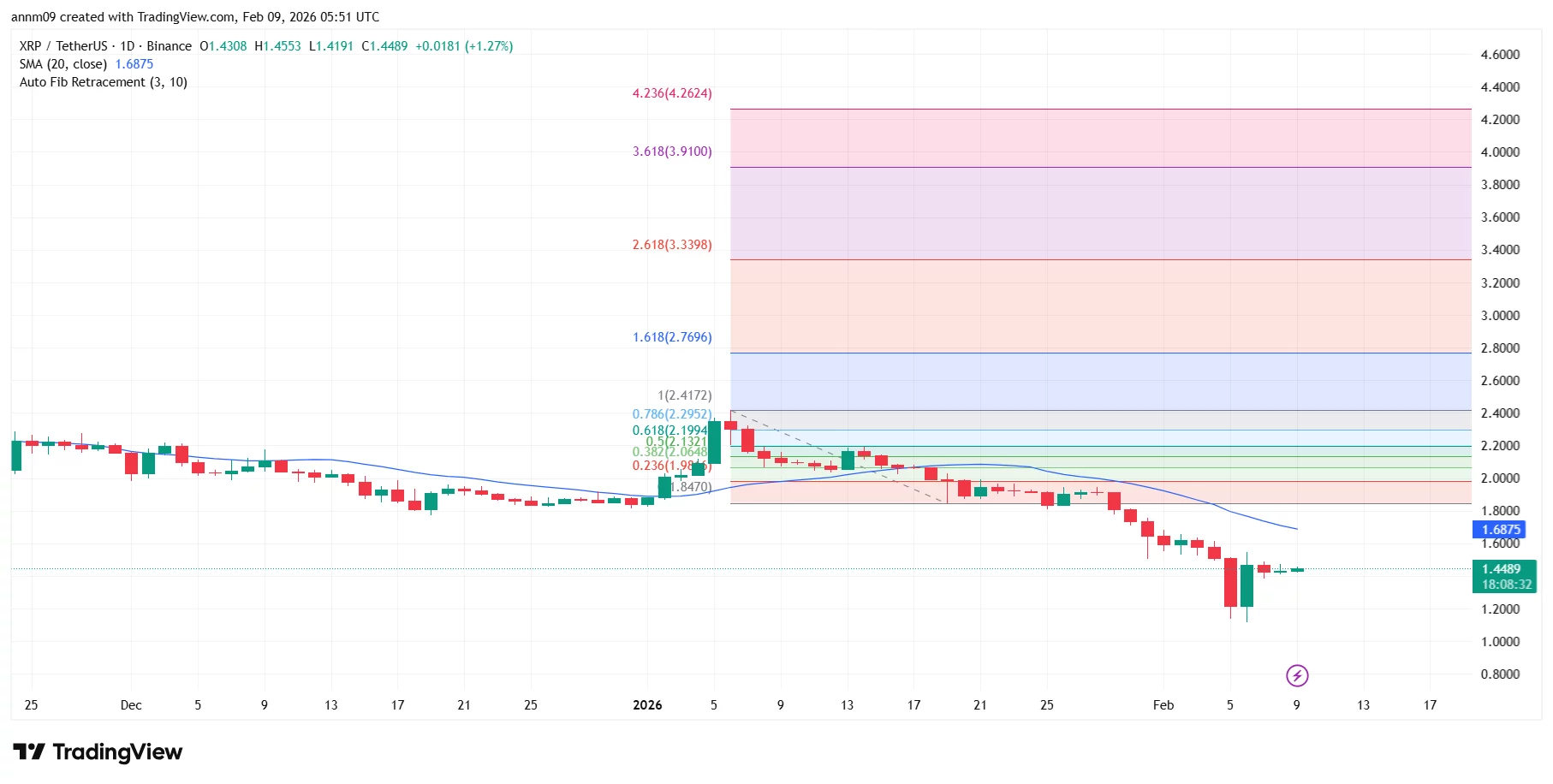
From a trend perspective, XRP is trading well below its 20-day simple moving average, currently near $1.68. The downward slope of that moving average underscores the lack of bullish follow-through and signals that rallies are likely to face selling pressure at higher levels.
Fibonacci retracement levels drawn from XRP’s recent swing high to its January low further highlight the challenge for buyers. The $2.05–$2.30 zone, which includes the 0.382, 0.5 and 0.618 retracement levels, represents a dense area of overhead resistance. A sustained move above that range would be needed to shift the short-term outlook more constructively.
Until then, analysts say the latest 2% rise should be viewed in context — as a pause within a broader downtrend rather than a decisive change in direction. With momentum and volume indicators still favoring sellers, XRP’s price action suggests caution remains warranted in the near term.
Japan’s “Takaichi trade” is shifting global capital flows and tightening liquidity, adding short-term downside pressure to Bitcoin as U.S. stocks weaken.
Bitcoin is facing fresh near-term pressure as political shifts in Japan reshape global capital flows and reinforce a cautious tone across risk markets.
In a Feb. 9 analysis, CryptoQuant contributor XWIN Research Japan said the landslide victory of Prime Minister Sanae Takaichi in the Feb. 8 lower house election has accelerated what traders now call the “Takaichi trade,” a mix of aggressive fiscal policy, tolerance for yen weakness, and support for loose monetary conditions.
The ruling Liberal Democratic Party-led coalition secured a two-thirds supermajority, giving the new administration broad room to push stimulus and regulatory reforms.
Markets responded quickly. The Nikkei 225 climbed to fresh record highs above 57,000 on Feb. 9, while the yen weakened toward 157 per dollar before stabilizing on intervention talk. Japanese government bonds also came under pressure as investors adjusted to higher spending expectations.
At the same time, U.S. equities slipped into correction territory. Over the past seven days, the Nasdaq fell 5.59%, the S&P 500 declined 2.65%, and the Russell 2000 dropped 2.6%, reflecting tighter liquidity and a re-assessment of risk.